Notice: Function register_uninstall_hook was called incorrectly. Only a static class method or function can be used in an uninstall hook. Please see Debugging in WordPress for more information. (This message was added in version 3.1.0.) in /home/infrajju/public_html/wp-includes/functions.php on line 6131

Warning: Constant WP_MEMORY_LIMIT already defined in /home/infrajju/public_html/wp-config.php on line 83
Blog – InfrastructurePhotos

Category: Blog

  • RAW File Format

    As we are Nikon users this extract is relevant to the definition of RAW file format.

    Exclusive to Nikon cameras, the NEF is Nikon’s RAW file format. RAW image files, sometimes referred to as digital negatives, contain all the image information captured by the camera’s sensor, along with the image’s metadata (the camera’s identification and its settings, the lens used and other information). The NEF file is written to the memory card in either an uncompressed or “lossless” compressed form.

    The primary benefit of writing images to the memory card in NEF format rather than TIFF or JPEG is that no in-camera processing for white balance, hue, tone and sharpening are applied to the NEF file; rather, those values are retained as instruction sets included in the file. You can change the instruction set as many times as you like without ever disturbing the original image’s RAW data. Another benefit of the NEF file is that depending on the camera, it retains 12-bit or 14-bit data, resulting in an image with a far greater tonal range than an eight-bit JPEG or TIFF file.

    After-capture processing of the NEF file by Nikon’s Capture NX2 software, or other imaging programs, offers greater control over the final image than the processing of a JPEG or a TIFF. After processing, the NEF file can be saved as a TIFF, JPEG or again as a NEF with the addition of any applied Capture NX2 processing saved inside the file as a second or alternate instruction set. As long as the original NEF file is preserved, the “digital negative” remains untouched; processing a NEF file does not alter the original instruction set.

    Source: http://www.nikonusa.com/en/learn-and-explore/a/products-and-innovation/nikon-electronic-format-nef.html


  • Photographing Architecture

    Photographing Architecture

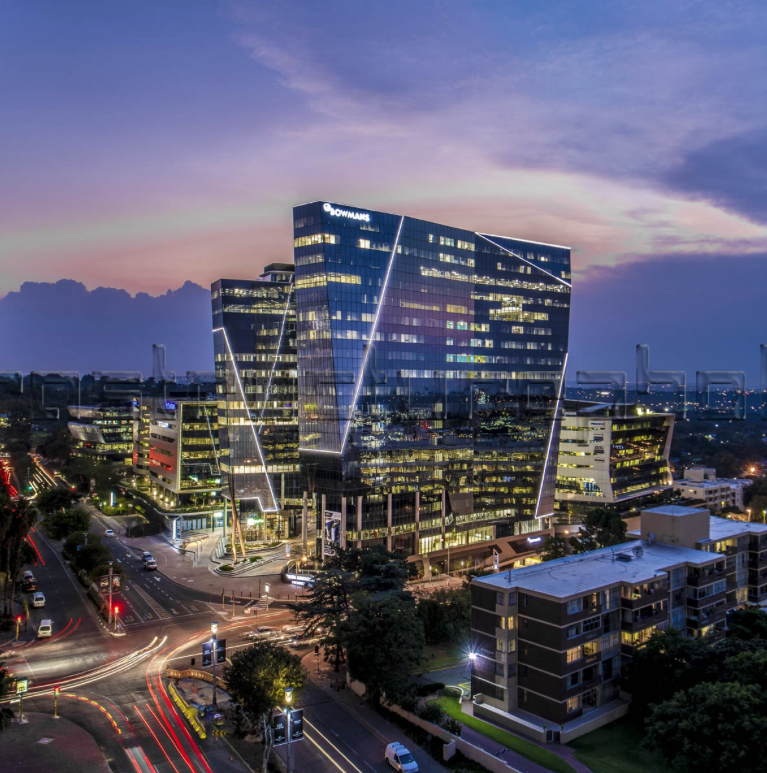
    InfrastructurePhotos is a specialist architectural and construction photography firm  that has photographed over 400 buildings (+25 000 hours). We have have procedures and workflows that help capture the best images of your building. This article will give you an idea of how we operate and produce final images.

    When commissioned to photograph your building, there are a number of things we take into consideration, i.e. it’s location, design, weather conditions,  sun path, heights of buildings in close proximity etc. Prior to the shoot, using sun positioning, we decide which are the best times to photograph exteriors and angles that work with for your building. We require our clients to complete a shoot preparation document, which sets out the client’s brief and expectations that guides us when photographing your building. This document is critical in managing expectations both ways. Each building is unique and once the brief is finalized our team starts the workflow preparation. A  flexible schedule depended on weather, time, shadows etc is finalized. Weather is a critical variable that InfrastructurePhotos has no control over, especially when it comes to photographing exteriors. Depending on the nature of the building, we also consider the best time to photograph the interiors. Best angles  are decided during the planning phase to ensure we maximize our time creating masterpieces for our clients. In most cases, apart from using VR planning software, and if feasible, we usually go to the site/building prior to the shoot to finalize the planning concept. With this approach, depending on the commission our photographers capture 10-15 images per hour. Conceptualization will continue through the shoot using the researched and planning information.

    Once all the planning is done,  we prepare the photographic equipment suitable for the commission.  60% of our exteriors and all interiors are photographed on a tripod, as we reduce our shutter speed to ensure enough light is captured to bring out the best of the interiors. Often, interior spaces need to be cleaned and in public places like a shopping mall, standing trolleys would need to be moved and one would need to wait for the cleaning staff to move out of the frame in order to capture the best image. Due to these factors, interiors take longer to photograph as opposed to day time exteriors. Twilight exteriors are also photographed off a tripod to ensure there is no camera shake. At times exteriors are photographed with a shutter speed of 30 seconds to a minute.

    Our photographers do not at any stage randomly go to a building and press the shutter button, hope for the best, then sit in the studio and sift through thousands of trial and error images to give the client. Our photographers take the time to understand the design intent of the building, the architecture behind it, the engineering intent and when we arrive at your building/site. Normally we walk around the building to get a feel for it before photographing, then we set up our gear (tripod, camera, filter and lighting), adjust angles, camera settings (we photograph in manual mode only which means aperture, shutter speed and ISO are manually set to suit mood and creative intent). We take time to conceptualize the ideal shots based on the brief provided. Once all set we photograph and move onto the next point.

    Once complete, back at the office, images photographed in .NEF format often called “RAW file format” are converted to DGNs and the editing commences. Once completed, high resolution images in  JPEG or TIFF (lossless) formats go through a QA process and then sent to clients via Dropbox/DVD/ InfrastructurePhotos QA checked external hard to ensure data integrity. No image leaves InfrastructurePhotos without going through this rigorous process.

    At no stage do we provide clients .NEF formats, as we are commissioned to provide the final product which is a blend of our experience, artistic flair, the .NEF and editing. Other reasons we do not give clients .NEF files are as follows:-

    1. We work in a competitive environment and a raw images contains our IP which includes settings to achieve our award winning images.
    2. This IP can fall into the wrong hands and be handed to our competition. In 2012 we worked on a project with a procurement manager who had a preferred company and requested “RAW”, re months later our commission was cancelled and the procurement manager  preferred photographer was appointed regardless of no experince in Infrastructure Photography. Fortunately one needs more than our shoot settings to replace us. Safe to say we were reappointed a few months later as the client picked up the discrepancies betweeen our work and that of the competition. What happened to the procurement manager is a story for another day.
    3.  When we are commissioned, we are paid to utilize our skills, creativity, experience to produce the final product which is an image in JPEG or TIFF formats. Without the experience and the process, there would be no finished product.
    4. Clients commission us to be able to be able to decide what is a good image or not.
    5. Loss of brand control
    6. Our brand reputation is on the line every time we hand an image to a client and editing is a crucial part of our process in ensuring the best results of the final product.
    7. We are hired because we are a team of talented specialist infrastructure photographers, our  style and because you loved our images on website, in our profile, on our social media accounts, professionalism, award winning images and reputation of delivering exceptional work. All these are final images that came out of our standard worflows and experience.
    8. Raw files are meant for editing and re editing.

    We are passionate about architectural photography and we believe your buildings deserves to be photographed with passion. Photographing architecture successfully is team work with the client, whose support is required to finalize the brief which has to be signed off prior to commencing, ensuring the building is clean and in top shape to be photographed and also ensuring that items like lights and illuminated signs are working. Clients are also responsible for arranging the necessary permissions and ensuring that security is aware we are coming.

    We look forward to photographing your project in the near future. 

  • Architectural Photography

    Architectural Photography

    Nowadays we all have a camera of some sort; a point and shoot/DSLR/Drone/Disposable/Smart device with a camera. With the ease of access to cameras, it comes as no surprise that almost everyone considers themselves a photographer. Last week whilst on a commission of the largest shopping centre in South Africa, I was approached by a young man. He rushed towards the team and said “really cool, bud you into photography? ….. what camera do you use? My dad bought me one like that, its pretty rad”. I smiled and said something along the lines of “I hope you are putting your camera to good use”. Often I would like to respond by saying “I have watched all of Jamie Oliver’s shows and read all his cookbooks, plus my girlfriend bought me the exact same pots and stove Jamie uses, and my food is as good”…

    Architectural Photography is the photography of buildings. I started learning to photograph architecture in my first year Part 1 BA Architecture Undergraduate Degree. Concepts I learnt in my 3 years of studying architecture helps me every day as I go out to photograph a building and these concepts play a major part in how I compose shots. I am a firm believer that architectural photography should highlight the architect’s design concept, bring out the vision of the design team and most of all architectural photography images should be an accurate representation of the actual building without elaborate distortion. One should be able to identify the building and detail when comparing the building to the image of the building.

    Photographing architecture similar to wedding photography or portrait photography requires specific skills and understanding of architecture and architectural design. These particular skills can be found in experienced architectural photographers to recreate your design in pixels. An experienced photographer is able to showcase the key angles, structure, lighting and colours that make your building.

    As a client, your architectural photographer needs to make a number of considerations prior to photographing your building. Some of these include the following:

    • Understanding the client brief
    • Getting in touch with the form and shape of your building
    • Contextualising the location of your building
    • Best time of day to photograph your building – always get saddened when I see images shot when there is a full shade in the foreground….
    • Lighting
    • Best vantage points
    • Appropriate lenses to use – often I see buildings photographed with an incorrect lense which leads to massive distortions, for instance columns and walls curve in the image whilst they are actually straight in real life. At times you see an image of a quarter of a triple volume space as it would have been photographed with 50mm lense instead of a 14-24mm or 12-24mm lense.
    • Understanding that long exposure is not for every building (exteriors)
    • Understanding angles that work for buildings

    Your images should be able to be showcase, market and sell your building. As South Africa is part of the global economy, good images are important for anyone who is investing in a building and expects a return on investment on the building, as those images can be seen all over the world and can ultimately help someone sitting in New York to become a potential investor. South Africa has amazing architecture and if photographed correctly we can truly appreciate the great work our amazing Architects, Engineers, Project Managers, Interiors Designers, Landscape Architects and construction companies are doing across the country.

    InfrastructurePhotos – Passionate about architecture.

  • Why Nikon

    Why Nikon

    There will always be that conversation of why Nikon/why not Canon or vice versa.  My very first camera was a Nikon. Nothing high, Nikon with a fixed zoom lense. Really enjoyed, most of the time I used it on auto and I decided to be a professional. I went to study photography and put my camera on manual mode. Enjoyed it for a couple of years in the early 2000s until I felt I could handle a bigger beast.  Moved to my next Nikon….. and finally was buying a Nikon D800.

    For me Nikon and Canon are two very good camera brands. It all depends with what you are photographing and ease of use. Below are the reasons I chose Nikon

    1. Wide angle lenses – for what we do Nikon has better lenses. I am still to find a better lense than the Nikon 14-24mm ultra wide lense. This is my go to lense and use it extensively. It’s really sharp and wide, perfect for interiors and tight areas.
    2. The Nikon tilt/shift lense is another exciting piece of glass. Manual focus and very sharp. I find this lense to be able to hand lines very well. It’s one lense you shouldn’t be using when in a hurry.

    Whichever you go for i am sure you will come right! Happy shooting.